What Are Rubber O-Rings and Why Are They Essential in Industrial Applications?
Industrial Rubber O-Rings: Materials, Applications & Selection Guide
Industrial Rubber O-rings are used in a variety of sectors and the use of sealing solutions across industrial applications are important factors for business performance . As a trusted Rubber O-Rings Manufacturer, we at Easkay India offer high-performance O-rings that ensure leak-proof operation, withstand harsh environments, and meet required industry standards.
There are different kinds & materials for manufacturing O-Rings, Viton O-Rings, Nitrile O-Rings, or EPDM O-Rings, this blog will walk you through the materials, benefits, and the applications of rubber O-rings so that you can make an informed selection.
What is the Purpose of a Rubber O-Ring?
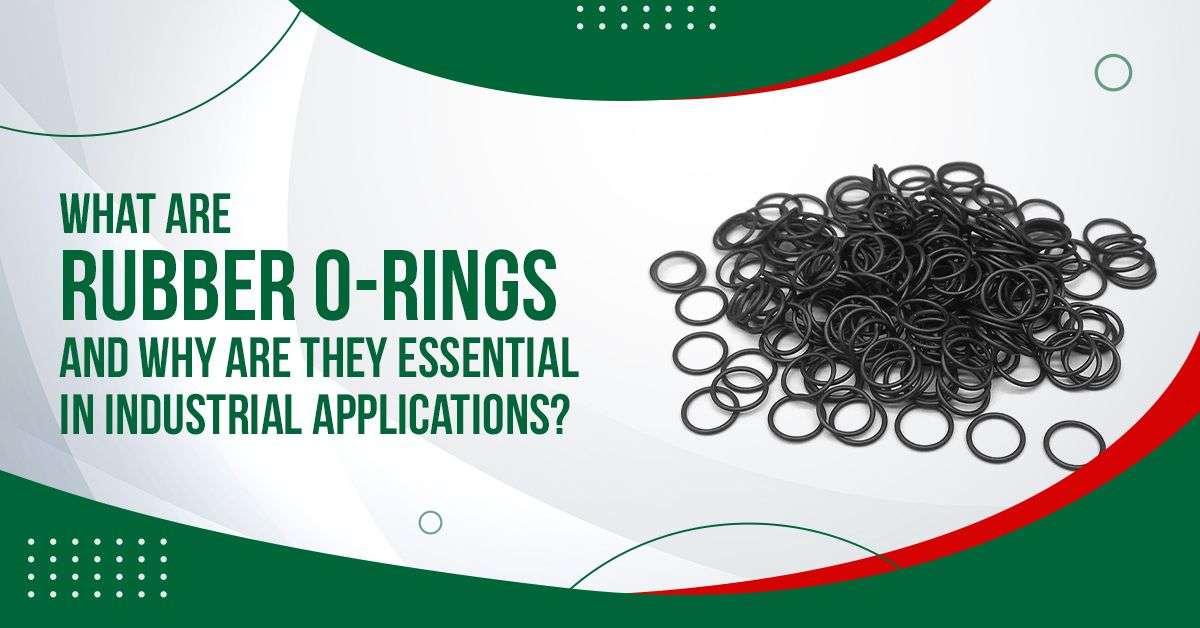
A rubber O-ring works as a mechanical gasket that creates a tight seal between two surfaces. It’s seated in a groove and compressed to prevent the passage of fluids or gases. O-rings are important for leak prevention in static and dynamic systems, making them crucial to various mechanical and industrial facilities.
Types of Rubber O-Rings and Their Materials
Different materials offer different advantages based on the environment and use case. Here’s a quick breakdown:
- Silicone O-Rings: These are for extreme temperature conditions. Commonly used in medical, food, and beverage applications due to their flexibility and non-toxic properties.
- Viton O-Rings: works as excellent chemical and temperature resistant components. Perfect for use in aggressive environments like fuel systems, oil & gas, and aerospace.
- Nitrile O-Rings (Buna-N): Affordable and oil-resistant. Best suited for automotive, fuel, and hydraulic systems.
Applications of Rubber O-Rings
Rubber O-rings are used across a wide range of industries for both static and dynamic sealing purposes:
- Automotive engines, fuel systems, and transmissions
- Water and plumbing systems
- Electrical enclosures
- Food-grade equipment (with FDA-compliant materials)
- Oil & gas and chemical processing units
Selection Guide: How to Choose the Right O-Ring
When choosing an O-ring, consider the following parameters:
- Operating temperature: High-temp or cryogenic?
- Chemical exposure: Will it come in contact with oil, fuel, water, steam, or acids?
- Pressure rating: Is the application static or dynamic?
- Material compatibility: Match with fluids or gases being sealed
- Industry compliance: FDA, RoHS, or ISO standards
The right O-ring isn’t just about the fit—it’s about selecting a material that matches your environment and performance needs. Easkay India can help customize O-rings as per your industrial requirements.
Benefits of Rubber O-Rings
- Cost-effective and easily replaceable
- Reliable sealing even under extreme conditions
- Resistance to wear, chemicals, and temperature
- Compact and lightweight
- Versatile across industries and applications
FAQs
Q1. What is the purpose of the rubber O-ring?
To prevent leakage of liquids or gases by forming a tight seal between connected parts.
Q2. What are the applications of O-rings?
O-rings are used in automotive, plumbing, aerospace, hydraulics, food processing, and electronics.
Q3. What are the uses of rubber rings?
They act as seals, vibration dampeners, and sometimes even as spacers in mechanical systems.
Q4. Who uses O-rings?
Engineers, OEMs, maintenance professionals, mechanics, and manufacturers across industries.
Q5. What are the rubber rings for?
Primarily for sealing connections in machines, valves, engines, and pipelines.
Q6. What are the benefits of rubber rings?
They are flexible, durable, cost-effective, and adaptable to various environments.
Q7. How do you use rubber O-rings?
They are placed into a groove between mating parts and compressed during assembly to create a seal.
Conclusion
At Easkay India, we specialize in manufacturing Rubber O-Rings that are trusted by industries for their reliability and performance. With a wide range of materials like EPDM, Nitrile, Silicone, and Viton, our O-rings can be tailored for your specific sealing needs.