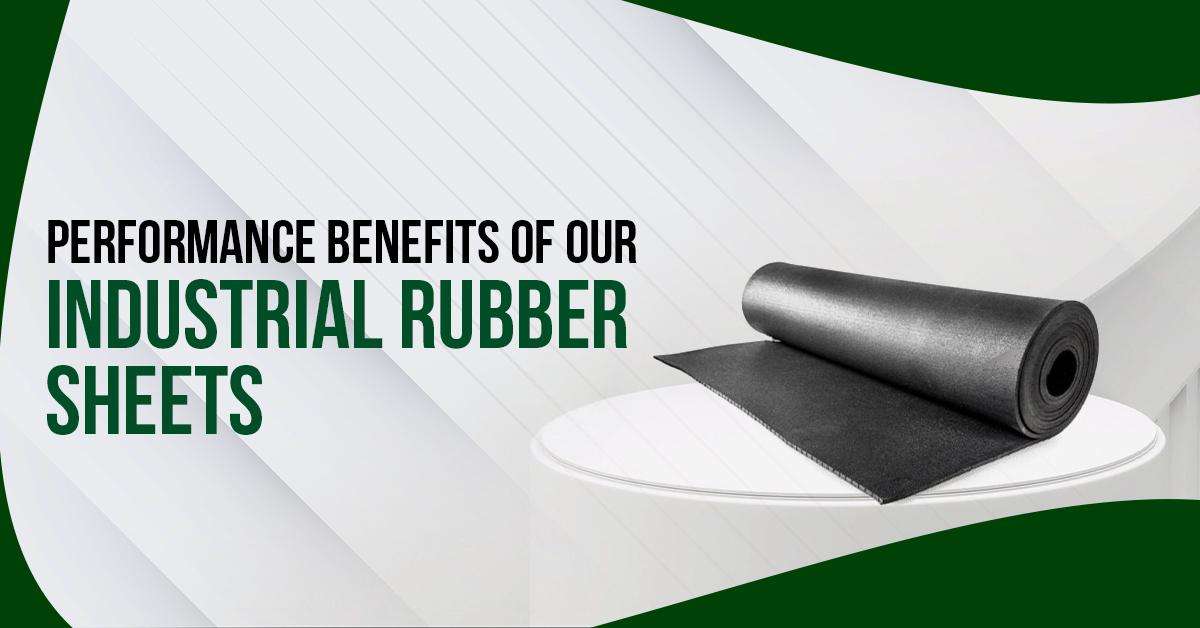
Performance Benefits of Our Industrial Rubber Sheets
In industrial applications where reliability and efficiency dictate operational success, the materials used in machinery, insulation, packing, and sealing must be dependable. Among such materials, industrial rubber sheets hold an important place because of their durability, flexibility, and resistance to harsh working conditions. At Easkay India, we supply high-quality rubber sheets designed for performance across multiple sectors. Trusted by companies across India, we are considered among the best rubber sheet suppliers in India for industries.
Key Performance Benefits of Industrial Rubber Sheets
Industrial rubber sheets deliver several advantages that make them suitable for multiple applications. Some of the most notable benefits include:
1) Excellent Resistance to Abrasion and Wear
Rubber sheets withstand constant pressure, friction, and machinery contact without rapid degradation. This makes them ideal for flooring, lining, and isolation surfaces in manufacturing units.
2) High Thermal and Chemical Stability
Depending on the material grade, rubber sheets can endure exposure to oils, chemicals and high temperatures, which are common in chemical plants, automotive workshops, and metal processing units.
3) Superior Sealing and Cushioning
Industrial rubber sheets offer secure sealing against leaks, vibration, or shock. This improves the machine’s output by reducing vibration, frictional losses, and noise.
4) Electrical and Insulation Properties
Certain grades of rubber sheets provide insulation against electricity and serve as reliable protection in electrical rooms, substations, and power control panels.
5) Long Service Life
Their ability to withstand environmental stress, moisture, UV exposure, and mechanical load ensures high performance with low replacement frequency.
Industries That Commonly Use Industrial Rubber Sheets
Because of their performance profile, industrial rubber sheets are used across many sectors, including:
- Automotive and Transport — for gaskets, lining, anti-vibration pads.
- Manufacturing Plants — for conveyor bases, machine mounts, sealing sheets, flooring
- Electrical & Power — as insulating mats for operator safety
- Construction & Infrastructure — for waterproofing, joint sealing, impact protection
- Chemical Processing Units — for lining surfaces exposed to corrosive fluids
- Pharmaceutical and Food Manufacturing — for hygienic sealing applications where approved grades are required
- Mining & Heavy Engineering — to reduce wear in contact zones and absorb impact
This versatility has made rubber sheets a standard requirement across different engineering environments.
How Rubber Sheets Improve Equipment Performance
Industrial rubber sheets contribute to operational performance in more than one way:
- They minimize direct metal-to-metal contact, preventing premature wear and downtime.
- They reduce vibration and shock, protecting both machines and structures from fatigue.
- They provide slip-resistant surfaces, improving safety and stability in work areas.
- They ensure leak-free sealing, maintaining fluid control and pressure stability in equipment.
- They act as barriers against heat or electricity, reducing operational risk.
By improving safety, durability, and equipment longevity, the correct use of rubber sheets can directly influence productivity and maintenance costs in industrial environments.
Rubber Materials Used in High-Performance Rubber Sheets
Different industrial conditions require different material formulations. Common types include:
- NR (Natural Rubber) – strong elasticity and tear resistance
- NBR (Nitrile Rubber) – excellent oil and fuel resistance
- EPDM Rubber – high resistance to heat, weather, and UV exposure
- Silicone Rubber – stable under extreme temperatures, ideal for food and pharma
- Viton / FKM – superior chemical and heat resistance for critical environments
Selecting the correct material grade is essential to performance and compliance standards in industrial applications.
How to Choose the Right Rubber Sheet for Your Industrial Needs
When selecting rubber sheets, consider the following decision factors:
- Operating Temperature Range – choose a material that aligns with heat exposure levels
- Chemical Compatibility – ensure resistance to oils, acids, solvents, or gases present on site
- Mechanical Load and Wear Conditions – abrasion-resistant grades for heavy movement areas
- Electrical or Safety Requirements – use certified insulating or anti-skid grades where required
Why Easkay India for Industrial Rubber Sheets
As a trusted supplier of industrial rubber sheets, Easkay India provides products that go through quality checks for dimensional accuracy, hardness, material consistency, and surface finish. Our supply capabilities cover multiple grades, sizes, and applications, enabling procurement teams to source the right sheet without delays..
We work with customers from automotive, manufacturing, chemical, and engineering sectors, supplying high-quality rubber sheets built for performance and reliability.
Conclusion
Rubber sheets have earned their place as a core industrial material due to their durability, sealing performance, chemical resistance, and safety properties. Whether for equipment protection, surface insulation, structural sealing, or operational safety, the right rubber sheet directly contributes to reduced maintenance and improved productivity.
Frequently Asked Questions (FAQs)
1. What are the key performance benefits of industrial rubber sheets?
Industrial rubber sheets offer excellent durability, flexibility, and resistance to heat, oil, and abrasion. They help provide effective sealing, insulation, and vibration control in industrial environments.
2. Which industries commonly use industrial rubber sheets?
Industries such as automotive, construction, power generation, chemical processing, and manufacturing frequently use rubber sheets for sealing, flooring, gasketing, and protective lining applications.
3. How do industrial rubber sheets improve equipment performance?
By minimizing leaks, reducing vibration, and providing strong resistance against chemicals and weathering, industrial rubber sheets extend equipment life and improve operational efficiency.
4. What types of rubber materials are used in high-performance rubber sheets?
Common materials include natural rubber, neoprene, nitrile (NBR), EPDM, silicone, and Viton, each selected for specific properties like temperature resistance, oil resistance, or weather durability.
5. How can I choose the right rubber sheet for my industrial needs?
Consider factors such as temperature range, chemical exposure, thickness, hardness, and application type. Consulting a Rubber Products Manufacturer can help you select the most suitable industrial rubber sheet for your process.