Smart Manufacturing and Automation: Transforming the Rubber Industry
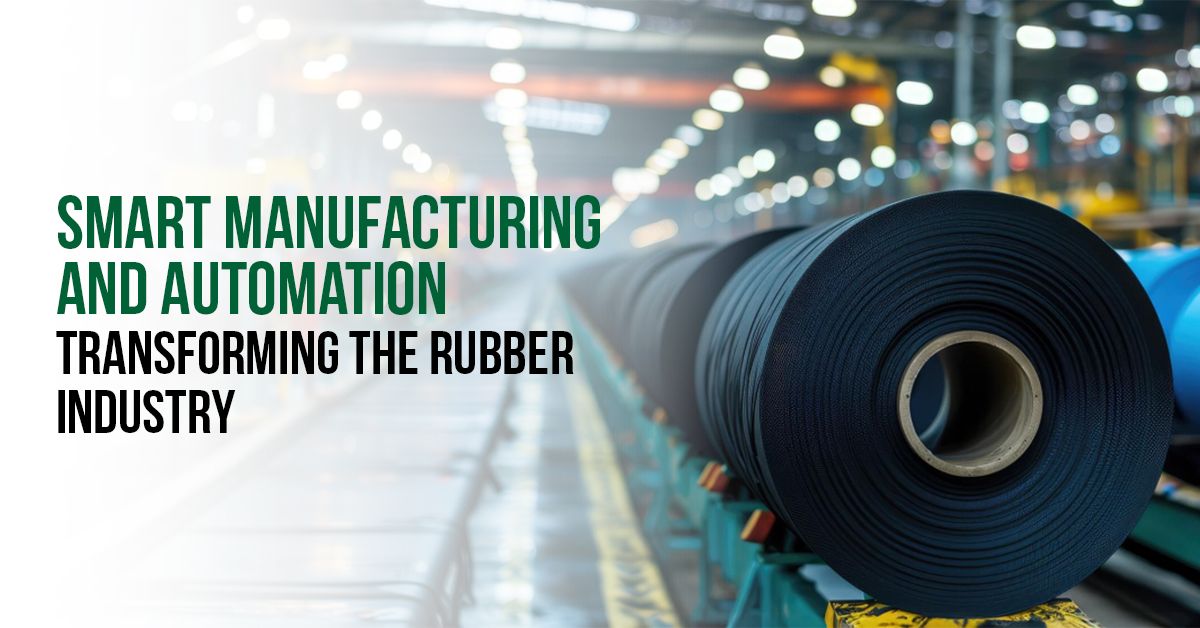
The rubber industry has traditionally been driven by skilled manpower, experience-based decision-making, and process know-how built over decades. While these fundamentals remain critical, today’s market demands much more—higher consistency, faster turnaround, tighter tolerances, traceability, and scalability. This is where smart manufacturing and automation are reshaping the rubber industry, moving it from conventional production setups to data-driven, technology-enabled operations.
Understanding Smart Manufacturing in the Rubber Industry
Smart manufacturing integrates automation, sensors, digital monitoring, and process controls to improve manufacturing outcomes. In rubber processing, this means connecting raw material handling, compounding, molding, curing, inspection, and dispatch into a more controlled and measurable system.
Unlike traditional setups, where operators rely heavily on manual checks, smart manufacturing enables:
- Real-time process monitoring
- Data-backed decision-making
- Reduced dependency on trial-and-error
- Improved repeatability across batches
Role of Automation in Rubber Manufacturing
Automation in the rubber industry does not mean replacing human expertise—it means enhancing it. Automated systems take over repetitive, high-precision, and time-sensitive tasks, allowing skilled operators and engineers to focus on supervision, optimisation, and quality assurance.
Key areas where automation is transforming rubber manufacturing include:
1. Automated Compounding and Mixing
Rubber compounding demands strict control over formulation, mixing time, and temperature. Automated mixing systems ensure:
- Accurate dosing of raw materials
- Uniform dispersion of fillers and additives
- Reduced batch-to-batch variation
This results in consistent physical properties such as hardness, tensile strength, and abrasion resistance.
2. Precision Moulding and Curing
Modern rubber molding machines equipped with programmable controls allow precise regulation of pressure, temperature, and curing cycles. Automated molding improves:
- Dimensional accuracy
- Surface finish consistency
- Reduction in defects such as under-curing or over-curing
3. In-Process Monitoring and Quality Control
Smart sensors and monitoring tools enable continuous tracking of production parameters. Deviations are identified early, reducing rejection rates and rework. Automated inspection systems further support:
- Dimensional checks
- Visual defect detection
- Data logging for traceability
Quality becomes proactive rather than reactive.
Benefits of Smart Manufacturing for Customers
The adoption of automation and smart systems directly benefits customers across industries such as automotive, electrical, infrastructure, railways, and industrial equipment.
Some key advantages include:
- Consistent Quality: Reduced variability ensures every batch meets defined specifications.
- Faster Lead Times: Streamlined processes improve production speed without compromising quality.
- Scalability: Automated setups allow quick scale-up for bulk orders.
- Traceability: Production data can be tracked batch-wise, supporting audits and compliance requirements.
- Cost Efficiency: Reduced waste, lower rejections, and optimised resource usage translate into long-term cost benefits.
Data-Driven Manufacturing: The New Backbone
One of the most significant shifts in smart manufacturing is the use of data. Machines now generate valuable insights on cycle times, energy usage, downtime, and defect patterns. When analysed correctly, this data helps manufacturers:
- Optimize processes
- Predict maintenance needs
- Improve machine uptime
- Identify opportunities for continuous improvement
In rubber manufacturing, where tooling and molds play a crucial role, data-driven maintenance also helps extend mold life and maintain product quality over time.
Automation with Flexibility: A Practical Approach
While automation brings efficiency, flexibility remains essential in rubber manufacturing due to varying customer requirements, custom designs, and material specifications. A balanced approach ensures:
- Automation supports customization
- Manual expertise complements automated systems
- New product development remains agile
This hybrid model allows manufacturers to serve both high-volume standardised products and specialised custom components effectively.
Skilled Workforce in a Smart Factory
Smart manufacturing does not eliminate the need for skilled professionals—it increases their importance. Operators, quality engineers, and production managers now work alongside automated systems, using data and digital tools to make informed decisions.
Training and upskilling become integral, ensuring the workforce can:
- Interpret machine data
- Maintain automated equipment
- Implement process improvements
- Uphold quality standards
This combination of technology and human expertise defines the modern rubber factory.
Conclusion
Smart manufacturing and automation are no longer future concepts—they are transforming the rubber industry today. By enabling consistency, efficiency, and scalability, these technologies help manufacturers meet growing market demands while maintaining control over quality and costs.
At Easkay India, the focus remains on strengthening manufacturing capabilities through thoughtful automation, process discipline, and continuous improvement. This approach ensures that every rubber component delivered performs reliably, batch after batch, application after application.
As the rubber industry moves forward, smart manufacturing will continue to be a key driver of sustainable growth, operational excellence, and customer trust.