Modern manufacturing and engineering demand materials that can deliver consistency, durability, and efficiency across a wide range of applications. Among the most widely used materials today, plastics have become indispensable due to their versatility and performance advantages.
However, not all plastics perform the same. The difference between standard and high-quality plastic components can significantly impact product performance, operational efficiency, and long-term costs. For industries that rely on precision and reliability, investing in high-quality plastics is not optional—it is essential.
The Growing Role of Plastics in Manufacturing
Over the past few decades, plastics have evolved from being a substitute material to becoming a primary choice across industries such as:
- Automotive
- Electrical and electronics
- Packaging
- Construction
- Industrial machinery
- Healthcare and medical devices
- And many more.
Their ability to be molded into complex shapes, combined with cost efficiency and performance benefits, makes plastics a preferred solution in modern engineering.
What Defines High-Quality Plastics?
High-quality plastics are not just about raw material selection—they are a result of controlled manufacturing processes, proper formulation, and strict quality standards. Key characteristics include:
- Consistent material properties
- High dimensional accuracy
- Resistance to environmental factors
- Long-term durability
- Application-specific customization
These factors ensure that plastic components perform reliably under real-world operating conditions.
Key Benefits of High-Quality Plastics
1. Durability and Long Service Life
One of the most important advantages of high-quality plastics is their durability. Unlike lower-grade materials that may crack, deform, or degrade over time, high-performance plastics are designed to withstand:
- Mechanical stress
- Repeated usage
- Environmental exposure
This results in extended product life and reduced replacement frequency.
2. Lightweight Without Compromising Strength
In industries such as automotive and machinery, reducing weight is critical for improving efficiency. High-quality plastics offer an excellent strength-to-weight ratio, allowing manufacturers to:
- Reduce overall product weight
- Improve energy efficiency
- Maintain structural integrity
This is especially valuable in applications where both strength and weight optimization are required.
3. Chemical and Corrosion Resistance
Unlike metals, plastics do not rust or corrode. High-grade plastic materials are engineered to resist:
- Chemicals and solvents
- Moisture and humidity
- Oils and greases
This makes them suitable for harsh industrial environments where material degradation can be a concern.
4. Design Flexibility and Precision
High-quality plastics enable complex designs that are difficult or expensive to achieve with traditional materials. Advanced molding techniques allow for:
- Intricate geometries
- Tight tolerances
- Custom shapes and sizes
This flexibility supports innovation and helps manufacturers meet specific application requirements.
5. Cost Efficiency in the Long Run
While high-quality plastics may have a higher initial cost compared to lower-grade alternatives, they offer better value over time through:
- Reduced maintenance
- Fewer replacements
- Lower downtime
For manufacturers, this translates into improved operational efficiency and cost savings.
Importance in Engineering Applications
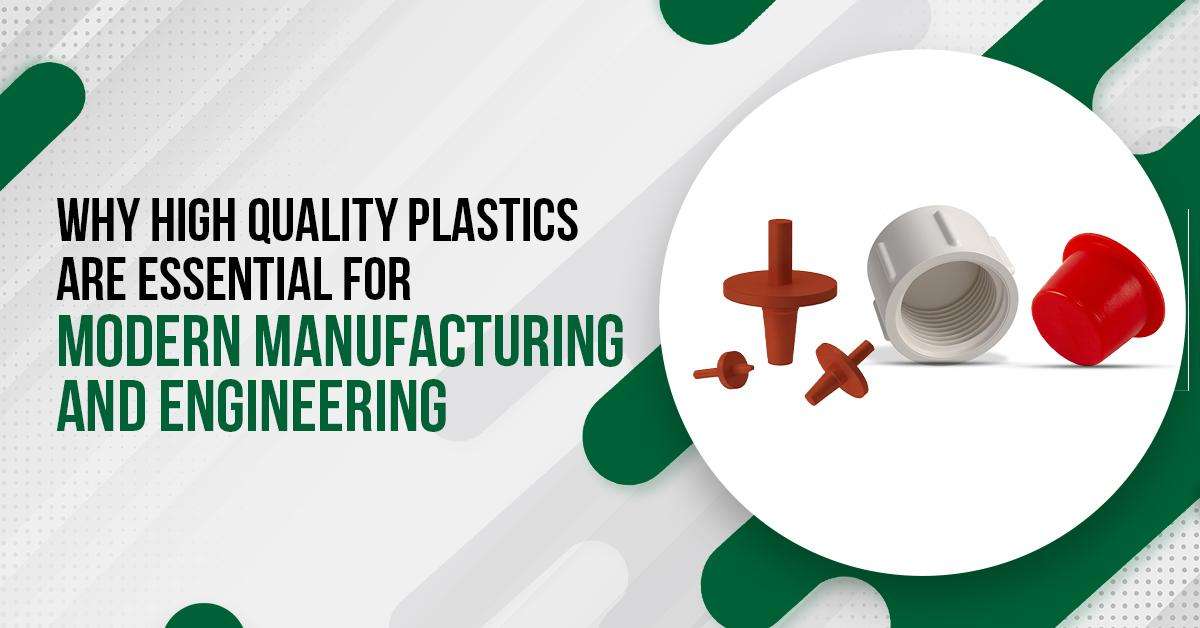
In engineering, even small components play a critical role in overall system performance. Plastic parts such as caps, plugs, seals, washers, and protective covers must meet strict functional requirements.
Using low-quality plastics in such applications can lead to:
- Component failure
- Leakage or contamination
- Reduced safety
- Increased operational costs
High-quality plastics ensure consistency and reliability, which are essential for maintaining engineering standards.
Material Selection: A Critical Factor
Different applications require different types of plastics. Selecting the right material is crucial to achieving the desired performance.
Common engineering plastics include:
- Polypropylene (PP): Lightweight, chemical-resistant, and widely used in industrial applications
- Polyethylene (PE): Good impact resistance and flexibility
- PVC: Strong, durable, and resistant to chemicals
- Nylon (PA): High strength and wear resistance
- PTFE (Teflon): Excellent chemical resistance and low friction
Choosing the right material based on load conditions, environment, and application ensures optimal results.
Manufacturing Quality Matters
Even the best raw materials can underperform if manufacturing processes are not controlled. High-quality plastic components depend on:
- Precision tooling and molding
- Controlled temperature and pressure conditions
- Consistent batch production
- and quality checks
Dimensional accuracy and repeatability are critical, especially for components used in industrial assemblies.
Applications Across Industries
High-quality plastic components are used in a wide range of applications, including:
- Protective caps and plugs for packaging and transport
- Bushings and spacers in machinery
- Electrical insulation components
- Fluid handling systems
- Conveyor and material handling equipment
In each case, the performance of the plastic component directly impacts the efficiency of the overall system.
Why Quality Should Never Be Compromised
In manufacturing, cutting costs by opting for lower-grade plastics can lead to long-term challenges such as:
- Frequent failures and replacements
- Increased downtime
- Damage to associated components
- Loss of customer trust
High-quality plastics provide consistency and reliability, ensuring that products meet performance expectations over time.
Conclusion
High-quality plastics have become a cornerstone of modern manufacturing and engineering. Their ability to combine durability, flexibility, and cost efficiency makes them essential for a wide range of applications.
For manufacturers aiming to improve product performance and reduce operational risks, investing in high-quality plastic components is a practical and strategic decision. The right material, combined with proper manufacturing processes, ensures reliability—something every industry depends on.