In industrial machinery and automotive systems, performance is not just defined by large components like motors or structures—it is equally dependent on smaller elements that control movement, reduce stress, and improve durability. One such critical component is the rubber bushing.
Though often overlooked, rubber bushings play a key role in ensuring smooth operation, minimizing wear, and extending the life of equipment. Whether in heavy machinery, conveyor systems, or vehicles, the right bushing can significantly improve efficiency and reduce maintenance costs.
What Are Rubber Bushings?
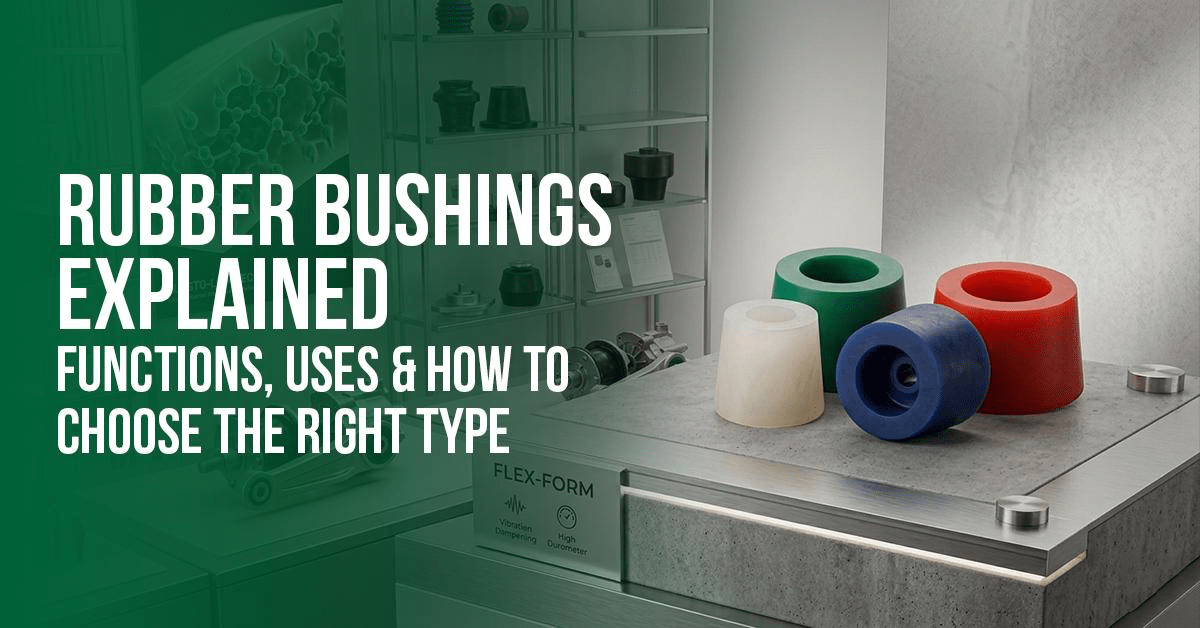
Rubber bushings are cylindrical or sleeve-like components made from elastomeric materials such as natural rubber, nitrile, EPDM, or polyurethane. They are typically placed between two metal parts to isolate movement, absorb shocks, and reduce vibration.
In simple terms, a rubber bushing acts as a flexible interface between rigid components. Instead of allowing direct metal-to-metal contact, it provides cushioning and controlled motion, which is essential in dynamic applications.
Bushings may be:
- Plain rubber components
- Metal-bonded rubber bushings
- Flanged or custom-shaped designs depending on application
They are widely used across industries because of their ability to perform under continuous load and motion.
Why Rubber Bushings Are Important
Without bushings, machinery would experience:
- Excessive vibration
- Increased noise levels
- Faster wear of components
- Reduced operational stability
Rubber bushings help maintain system integrity by controlling how parts move relative to each other.
Key Functions of Rubber Bushings
1. Vibration and Shock Absorption
Machinery generates constant vibration during operation. Rubber bushings absorb and dampen these vibrations, preventing them from transferring to other components. This is especially important in heavy-duty equipment and automotive suspension systems.
2. Noise Reduction
Direct contact between metal parts produces noise. Bushings act as a buffer, significantly reducing operational noise, which is important in both industrial and commercial applications.
3. Prevention of Metal-to-Metal Contact
One of the primary roles of a bushing is to eliminate direct contact between moving parts. This reduces friction, prevents damage, and increases the life of components.
4. Controlled Movement and Flexibility
Rubber bushings allow limited and controlled movement between parts. This flexibility is crucial in systems where alignment changes during operation.
5. Load Distribution
Bushings help distribute loads evenly, reducing stress concentration on specific areas and improving overall durability.
Common Uses of Rubber Bushings
Rubber bushings are used in a wide range of applications, including:
- Automotive Systems: Suspension, control arms, engine mounts
- Industrial Machinery: Mounting points, vibration isolation systems
- Conveyor Systems: Idler rollers and support structures
- Material Handling Equipment: Trolleys, carts, and platforms
- Construction Equipment: Excavators, loaders, and heavy-duty machines
In all these applications, bushings help improve performance while reducing wear and maintenance.
Types of Rubber Bushings
Choosing the right material is essential for performance. Different applications require different types of rubber bushings:
Natural Rubber Bushings
- High elasticity and flexibility
- Suitable for general-purpose applications
- Cost-effective but limited resistance to oil and chemicals
Nitrile (NBR) Bushings
- Excellent resistance to oil, grease, and fuels
- Commonly used in automotive and industrial environments
EPDM Bushings
- Strong resistance to weather, ozone, and UV exposure
- Ideal for outdoor and environmental applications
Polyurethane (PU) Bushings
- Higher load-bearing capacity
- Better abrasion resistance
- Longer life in high-stress conditions
Silicone Bushings
- Suitable for high-temperature environments
- Used in specialized applications
Each material has its own strengths, and selection should always be based on application requirements.
How to Choose the Right Rubber Bushing
Selecting the correct bushing is not just about size—it requires understanding operating conditions and performance expectations.
1. Load and Stress Conditions
Determine whether the bushing will be exposed to static or dynamic loads. Heavy-duty applications require stronger materials like polyurethane.
2. Temperature Range
If the application involves high or low temperatures, choose materials like silicone or EPDM that can handle such conditions.
3. Exposure to Chemicals or Oil
For oil or fuel exposure, nitrile (NBR) is a better choice. For outdoor use, EPDM is more suitable.
4. Flexibility vs Stiffness
Some applications require more flexibility, while others need rigidity. This is determined by the hardness (Shore A) of the material.
5. Dimensional Accuracy
Proper fit is critical. Incorrect sizing can lead to improper functioning, premature wear, or failure.
6. Frequency of Movement
Applications with continuous motion require materials with high fatigue resistance.
Design and Manufacturing Considerations
The performance of a rubber bushing also depends on how it is manufactured. Important factors include:
- Material formulation and mixing
- Moulding process (compression, transfer, or injection)
- Bonding strength (in metal-bonded bushings)
- Quality control and testing
Consistency in production ensures that each batch performs reliably under similar conditions.
Why Quality Matters
Using low-quality bushings may reduce initial cost but leads to long-term issues such as:
- Cracking or deformation
- Loss of elasticity
- Increased vibration and noise
- Frequent replacements
- Machine downtime
High-quality bushings, on the other hand, offer:
- Longer service life
- Consistent performance
- Reduced maintenance
- Better cost efficiency over time
Easkay India’s Approach
At Easkay India, we manufacture rubber bushings tailored to industrial requirements. Our focus is on:
- Selecting the right material based on application
- Maintaining consistency in production
- Offering customized sizes and designs
- Ensuring reliable performance in demanding environments
With experience across rubber, plastic, PU, and PVC components, we support industries with solutions that are practical and performance-driven.
Conclusion
Rubber bushings may appear to be simple components, but their role in machinery is critical. From vibration control to load management and component protection, they directly influence the efficiency and lifespan of equipment.
Choosing the right bushing involves understanding the application, selecting the correct material, and ensuring proper manufacturing quality. For industries where performance and reliability are important, investing in high-quality rubber bushings is a smart and necessary decision.