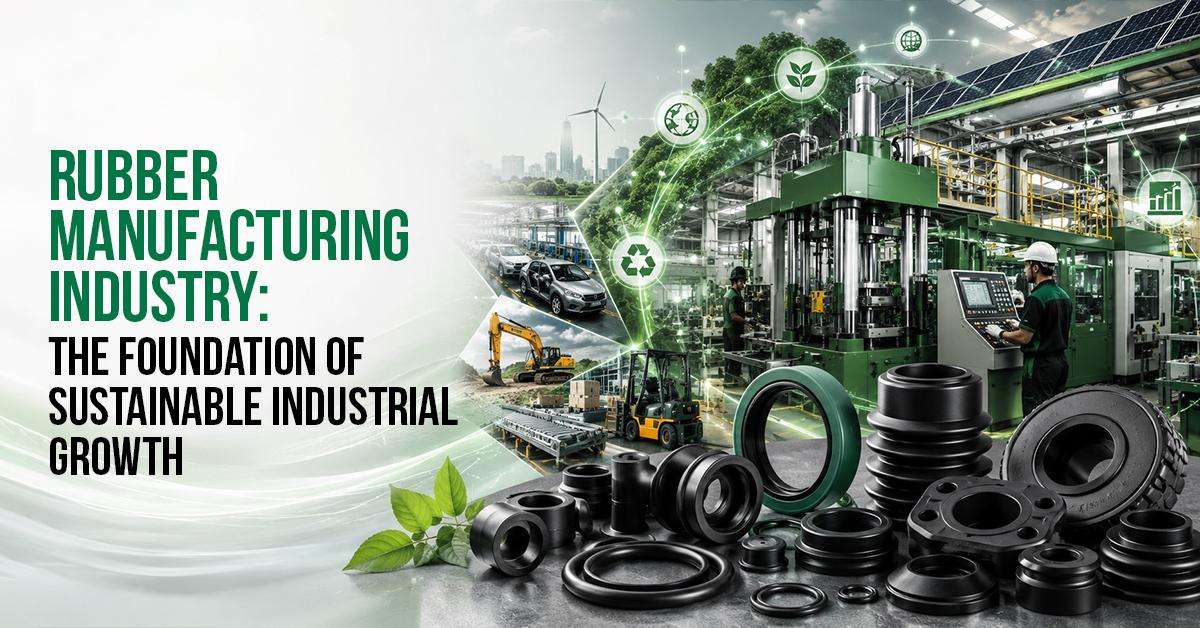
Rubber Manufacturing Industry: The Foundation of Sustainable Industrial Growth
The global industrial sector depends heavily on materials that offer durability, flexibility, resistance, and long-term performance. Among these materials, rubber continues to play a critical role across industries ranging from automotive and infrastructure to electrical systems, oil & gas, railways, and industrial machinery. The Rubber Manufacturing Industry has evolved far beyond conventional sealing and insulation applications, becoming a major contributor to modern industrial development and sustainability.
Today, industries demand advanced Rubber Products that not only perform reliably under challenging conditions but also support efficiency, safety, and environmental responsibility. From vibration control systems and sealing components to customized industrial parts, the rubber sector has become deeply integrated into industrial operations worldwide.
As industries continue to modernize, the importance of Sustainable Rubber Manufacturing and innovative Rubber Engineering Solutions is increasing rapidly.
Understanding the Rubber Manufacturing Industry
The Rubber Manufacturing Industry involves the development, processing, and conversion of natural and synthetic rubber into functional industrial components and finished products. Rubber compounds are engineered to achieve specific properties such as:
- Heat resistance
- Oil resistance
- Chemical resistance
- Abrasion resistance
- Flexibility
- Compression strength
- Electrical insulation
Modern industries use a wide range of elastomers, including:
- Natural Rubber (NR)
- Nitrile Rubber (NBR)
- EPDM Rubber
- Silicone Rubber
- Neoprene Rubber
- Viton Rubber
- Polyurethane (PU)
These materials are processed into various Industrial Rubber Products such as:
- O-rings
- Gaskets
- Bushes
- Rubber sheets
- Dust caps
- Silicone maskings
- Sealing components
- Anti-vibration pads
- Roller rings
- Rubber sleeves
- Protective covers
The demand for specialized and Custom Rubber Products continues to rise as industries require components designed for specific operating environments and technical applications.
Why Rubber Manufacturing is Essential for Industrial Growth
Industrial development depends on reliable materials capable of performing under demanding operational conditions. The Rubber Manufacturing Industry supports this growth by providing flexible and engineered solutions for machinery protection, sealing systems, insulation, transportation, and safety applications.
Supporting Industrial Infrastructure
Rubber components are widely used in:
- Manufacturing plants
- Conveyor systems
- Heavy machinery
- Power plants
- Electrical infrastructure
- Transportation systems
- Construction equipment
Without durable Industrial Rubber Applications, many industrial systems would face increased wear, leakage, vibration, and maintenance costs.
Improving Equipment Reliability
One of the key benefits of modern Rubber Products is their ability to improve equipment performance and lifespan. Components such as seals, gaskets, and vibration mounts help reduce:
- Mechanical stress
- Leakage
- Friction
- Dust contamination
- Noise and vibration
This contributes directly to operational efficiency and reduced downtime.
Enhancing Workplace Safety
Industrial rubber components also play a major role in workplace safety. Rubber insulation, protective caps, sealing systems, and anti-slip materials help create safer industrial environments.
Applications include:
- Electrical insulation systems
- Fire and safety equipment
- Cable protection
- Shock absorption systems
- Machine safety components
Enabling Industry-Specific Engineering
Modern industries increasingly require customized elastomer solutions. A professional Rubber Manufacturing Company develops compounds and products based on:
- Temperature requirements
- Pressure conditions
- Chemical exposure
- Environmental factors
- Industry standards
This flexibility allows industries to optimize equipment performance and reliability.
Key Innovations Driving the Future of Rubber Manufacturing
The future of the Rubber Manufacturing Industry is being shaped by innovation, automation, material science, and sustainability initiatives.
Sustainable Rubber Manufacturing
One of the biggest developments in recent years is the focus on Sustainable Rubber Manufacturing. Industries are now seeking environmentally responsible production methods that reduce waste, improve energy efficiency, and minimize environmental impact.
Sustainable practices include:
- Optimized material utilization
- Reduced manufacturing waste
- Energy-efficient production systems
- Recycling initiatives
- Long-life product development
The shift toward sustainability is also increasing demand for durable and Eco-Friendly Rubber Products.
Advanced Material Engineering
New elastomer formulations are improving resistance to:
- Extreme temperatures
- Harsh chemicals
- UV exposure
- Abrasion
- High-pressure conditions
For example:
- Silicone rubber is widely preferred for high-temperature applications.
- Nitrile rubber performs well in oil and fuel environments.
- EPDM offers excellent weather resistance.
Such material advancements are helping industries improve operational efficiency and product lifespan.
Precision Manufacturing & Automation
Automation and advanced molding technologies are improving consistency in Industrial Rubber Products. Modern production systems now support:
- Precision molding
- Faster cycle times
- Reduced defects
- Better quality control
This helps maintain product consistency for large-scale industrial applications.
Customization & Product Development
Industries increasingly demand application-specific solutions. As a result, Custom Rubber Products are becoming a major segment within the rubber sector.
Customized solutions may include:
- Special hardness levels
- Unique shapes and profiles
- Industry-specific compounds
- Heat-resistant designs
- Chemical-resistant materials
This level of engineering flexibility supports industries with complex operational requirements.
Challenges Facing the Rubber Manufacturing Industry
Despite its importance, the Rubber Manufacturing Industry also faces several challenges.
Raw Material Price Fluctuations
The prices of natural and synthetic rubber materials often fluctuate due to:
- Global supply chain disruptions
- Oil price changes
- Import/export conditions
- Market demand variations
These fluctuations can affect production planning and operational costs.
Environmental Regulations
Industries are under increasing pressure to adopt sustainable and environmentally compliant manufacturing practices. Rubber processing must meet:
- Waste management standards
- Emission regulations
- Chemical handling requirements
This is driving investment in cleaner production technologies.
Demand for High-Performance Products
Modern industries expect longer-lasting and higher-performing components. This creates pressure on the sector to continuously improve:
- Material performance
- Product durability
- Precision manufacturing
- Quality consistency
Global Competition
The rubber sector is highly competitive, requiring companies to maintain:
- Competitive pricing
- Reliable quality
- Faster delivery timelines
- Technical support
- Continuous innovation
Choosing the Right Rubber Manufacturing Partner
Selecting the right Rubber Components Manufacturer is critical for industries requiring reliable and durable rubber solutions.
Technical Expertise
A strong rubber partner should understand:
- Material selection
- Compound development
- Industrial operating conditions
- Application engineering
Customization Capability
Industries often require custom solutions rather than standard products. The ability to develop specialized rubber components is a major advantage.
Quality Consistency
Consistency is essential in industrial production. Reliable rubber engineering processes help maintain dimensional accuracy, material performance, and repeat production quality.
The Future Outlook of the Rubber Manufacturing Industry
The future of the Rubber Manufacturing Industry remains highly promising due to growing industrialization, infrastructure development, and technological advancement.
Industries such as:
- Automotive
- Railways
- Electrical systems
- Renewable energy
- Infrastructure
- Industrial machinery
- Oil & gas
will continue to rely heavily on advanced Industrial Rubber Products.
At the same time, the industry is expected to move toward:
- Smarter manufacturing
- Sustainable production methods
- High-performance elastomers
- Recyclable materials
- Energy-efficient processes
The demand for durable and Eco-Friendly Rubber Products will continue increasing as industries focus on long-term operational efficiency and environmental responsibility.
Modern industrial systems require more than standard rubber parts. They require engineered solutions capable of performing reliably under demanding conditions. This makes Rubber Engineering Solutions a key part of future industrial development.
Conclusion
The Rubber Manufacturing Industry serves as a foundational pillar for modern industrial growth. From sealing systems and vibration control to insulation and machinery protection, rubber components are essential across nearly every industrial sector.
As industries evolve toward sustainability, automation, and higher performance standards, the importance of advanced Industrial Rubber Applications will continue to grow. The future of rubber manufacturing lies in innovation, customization, and environmentally responsible production practices that support long-term industrial development.
With increasing demand for reliable, durable, and application-specific solutions, the rubber industry will remain a driving force behind global industrial progress for years to come.