Natural vs Synthetic Rubber: What’s Driving Change in the Rubber Industry?
The rubber industry has undergone major changes over the last few decades. As industries move toward better performance, sustainability, and cost efficiency, the debate between natural rubber vs synthetic rubber has become more important than ever. From automotive to electrical, and from consumer goods to heavy machinery, every sector relies on rubber components to ensure smooth, reliable performance.
Understanding Natural Rubber
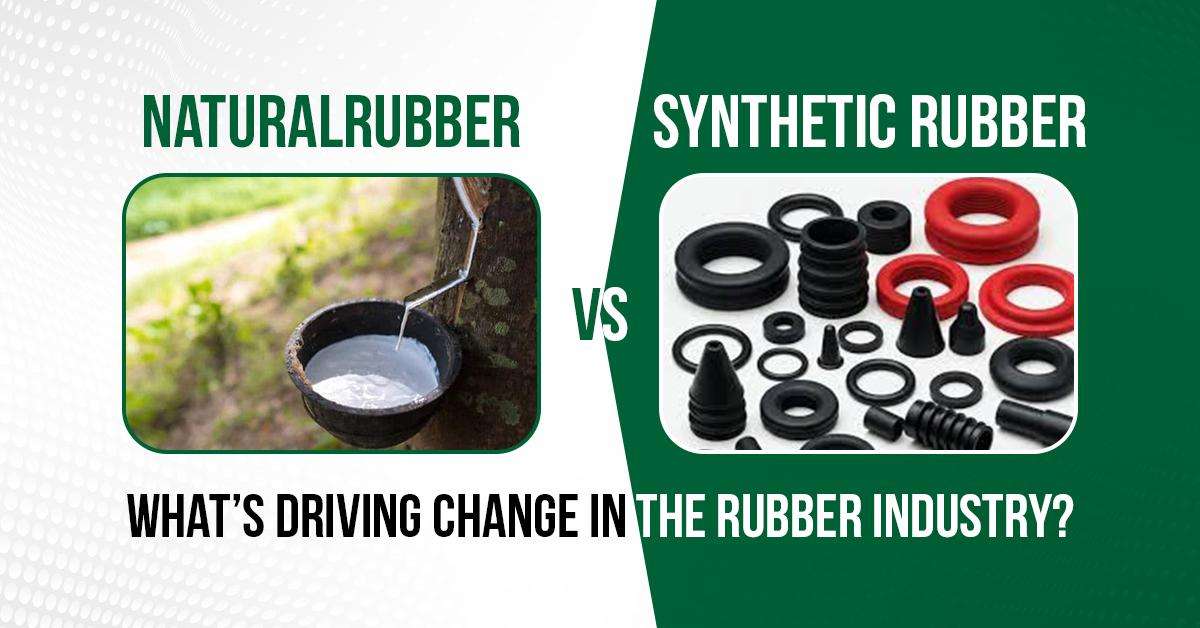
Natural rubber comes from the sap (latex) of the Hevea Brasiliensis tree. It has been used for centuries and remains one of the most important materials in the rubber industry.
How Natural Rubber Is Produced
- Trees are tapped for latex.
- Latex is collected, filtered, and processed.
- It is then rolled, dried, smoked, or chemically treated to get natural rubber sheets and blocks.
It is widely used in tyres, footwear, industrial products, medical supplies, and elastic materials.
Advantages of Natural Rubber
Natural rubber is preferred in many industries because of its excellent natural properties:
1. High Elasticity
Natural rubber has superior elasticity and tensile strength, making it ideal for products requiring flexibility.
2. Excellent Tear & Fatigue Resistance
It performs well in applications where repeated stretching, bending, or vibration is involved.
3. Good Grip & Friction Properties
That is why natural rubber is used heavily in tyres, belts, and conveyor systems.
4. Better Low-Temperature Performance
It stays flexible and soft even in cold environments.
5. Eco-Friendly Material
Since it comes from trees, natural rubber is renewable and biodegradable—an important factor in sustainability discussions.
These advantages make natural rubber a strong choice for industries such as automotive, footwear, medical, and industrial machinery.
Understanding Synthetic Rubber
Synthetic rubber is produced chemically, using petroleum-based monomers such as butadiene, styrene, isoprene, nitrile, and others. The most common types include:
- Nitrile Rubber (NBR)
- EPDM Rubber
- Neoprene
- Silicone Rubber
- SBR (Styrene-Butadiene Rubber)
- Viton / FKM
Synthetic rubbers are engineered to deliver specific performance benefits based on industrial needs.
Advantages of Synthetic Rubber
Synthetic rubber is widely used because it offers properties that natural rubber cannot match.
1. Better Oil & Chemical Resistance
Nitrile, Viton, and Neoprene rubbers are ideal for fuel systems, automotive parts, and industrial sealing.
2. Excellent Heat & Weather Resistance
Viton, EPDM and Silicone rubbers can handle high temperatures, UV light, ozone, and outdoor exposure.
3. Customisable Properties
Synthetic rubbers can be engineered for hardness, flexibility, strength, and environmental resistance.
4. High Durability
They offer longer service life in harsh environments.
5. Cost Efficiency
Production is more consistent and scalable, making synthetic rubber a stable option for large-volume industries.
This flexibility is why synthetic rubber dominates sectors like automotive seals, hoses, gaskets, electrical insulation, industrial components, and chemical applications.
Difference Between Natural and Synthetic Rubber
| Feature | Natural Rubber | Synthetic Rubber |
| Source | Latex from rubber trees | Petroleum-based chemicals |
| Elasticity | Very high | Moderate to high (depends on type) |
| Heat Resistance | Limited | Excellent for many grades |
| Chemical Resistance | Low | High for NBR, Viton, Neoprene |
| Durability | Good but ages in sunlight | Very high, weather-resistant |
| Environmental Impact | Renewable & biodegradable | Depends on petrochemical production |
| Cost Stability | Affected by climate & supply | Stable due to industrial control |
What’s Driving Change in the Rubber Industry?
The rubber industry analysis shows major shifts in production, materials, and demand.
Here are the key forces driving change:
1. Rise in Automotive Manufacturing
The global automotive industry relies heavily on rubber for:
- Seals
- Hoses
- Gaskets
- O-rings
- Tyres
- Vibration-control parts
- Washers
2. Demand for High-Performance Materials
Modern machinery requires rubber that can withstand:
- High temperatures
- Oils and fuels
- Chemicals
- UV and ozone exposure
- Heavy load and vibration
3. Environmental & Sustainability Concerns
Natural rubber plantations face:
- Climate change impact
- Deforestation concerns
- Supply fluctuations
Industries are exploring:
- Sustainable natural rubber
- Recycled rubber
- Bio-based synthetic rubber
4. Growth of Consumer Electronics & Appliances
Home appliances, HVAC systems, and electronics require precision rubber parts like:
- Silicone gaskets
- Vibration pads
- Plastic and rubber washers
- PU and PVC components
5. Technological Advancements in Rubber Production
Modern rubber factories use:
- Automated moulding
- Advanced compounding technology
- Precision testing equipment
- Quality certifications (ISO)
The Future of the Rubber Production Industry
The global rubber market is expected to grow steadily due to:
- Infrastructure development
- Automotive expansion
- Industrial machinery demand
- Medical and hygiene products
- Electrical and electronics growth
Synthetic rubber is likely to expand faster due to its engineered properties, while natural rubber will continue to grow in applications requiring high elasticity and sustainability.
Manufacturers that offer custom formulations, precision moulding, and high-quality rubber components will play a major role in the next decade.
Conclusion: Natural vs Synthetic Rubber – What Should Industries Choose?
Both natural and synthetic rubber have strong advantages.
The right choice depends on:
- Temperature range
- Chemical exposure
- Flexibility needed
- Cost expectations
- Environmental conditions
- Durability requirements
Many industries use a combination of both materials to balance performance and cost.
At Easkay India, we manufacture a wide range of rubber, silicone, PU, PVC, and plastic components, customised to your exact application needs. Our expertise allows customers to choose the right material—natural or synthetic—for long-lasting industrial performance.