Industrial rubber components are used across various applications where sealing, vibration isolation, cushioning, flexibility, insulation, abrasion protection and environmental resistance are required. Unlike standard rubber articles, industrial rubber components are generally specified around the operating conditions of the equipment, including temperature, pressure, chemical exposure, mechanical load and movement.
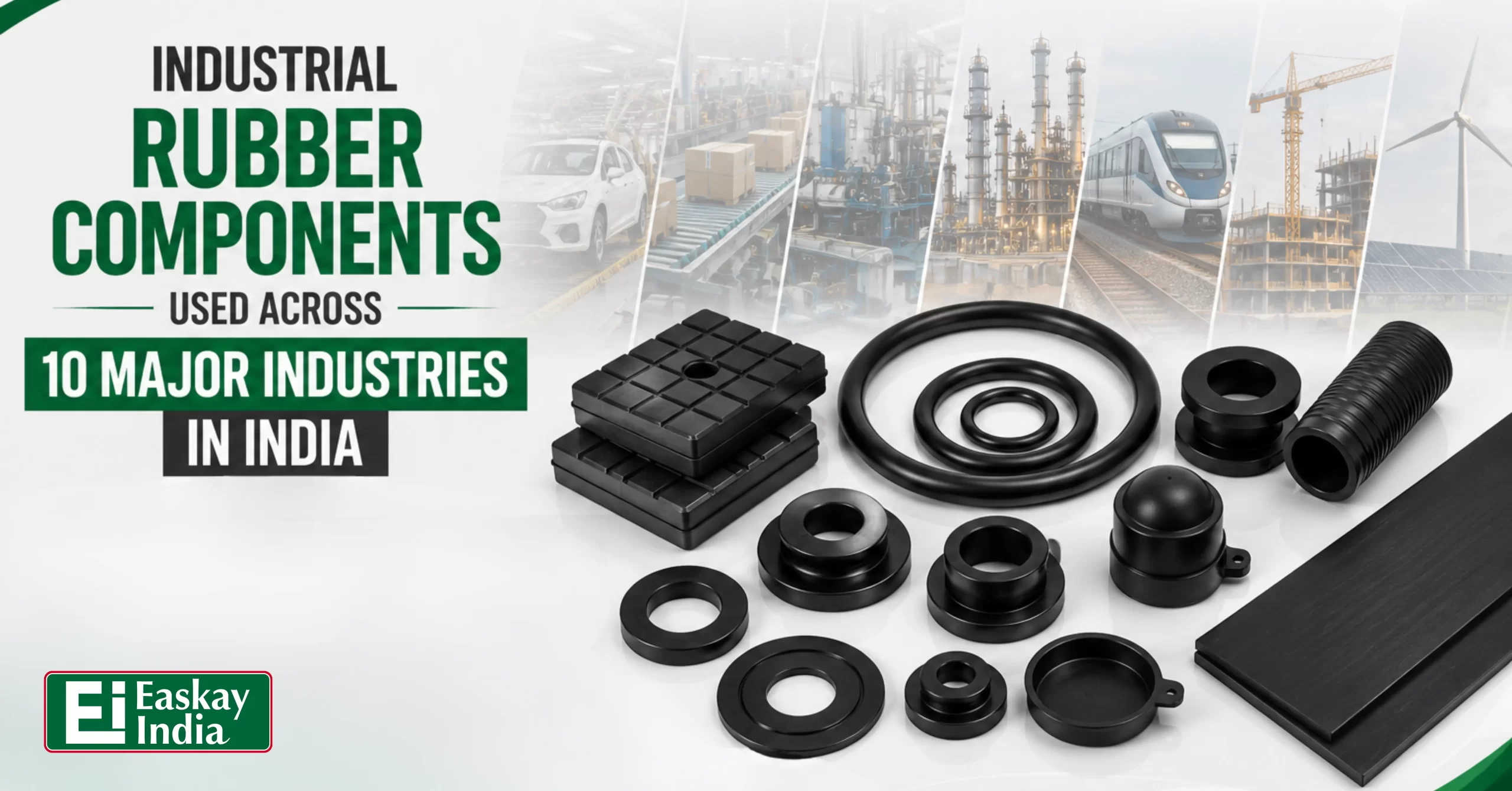
Common products include rubber O-rings, gaskets, bushes, seals, washers, sleeves, pads, grommets, plugs, dust caps, anti-vibration components, rubber sheets and moulded rubber parts.
In India, these components are used across automotive manufacturing, electrical and cable production, material handling, industrial machinery, hydraulics, oil and gas, railways, infrastructure and other engineering sectors. The required rubber compound and component design vary according to the application.
Here are 10 major industries where industrial rubber components play an important role.
1. Automotive & Auto Components
The automotive industry is one of the largest users of moulded and engineered rubber components. Rubber is used where components need to provide sealing, vibration isolation, cushioning, flexibility or protection against dust and fluids.
Common applications include:
- Rubber bushes
- O-rings
- Rubber gaskets
- Oil and fluid seals
- Rubber washers
- Grommets
- Anti-vibration pads
- Dust covers and protective caps
Rubber bushes and mounts help isolate vibration between mechanical assemblies, while gaskets and seals help prevent leakage of oils, coolants and other fluids. Automotive rubber components may also be exposed to temperature changes, oils, fuels, vibration and continuous mechanical loading, making material selection important.
Indian rubber manufacturers commonly supply bushes, mounts, gaskets, seals and other moulded components for automotive and powertrain applications.
2. Electrical, Cable & Wire Industries
Electrical and cable manufacturers use rubber components primarily for insulation, protection, sealing and mechanical support.
Typical applications include the following:
- Rubber grommets
- Cable entry seals
- Rubber washers
- Protective caps
- Rubber plugs
- Insulating components
- Custom moulded rubber parts
Grommets and rubber seals can protect cables as they pass through panels or housings, reducing the risk of abrasion and providing environmental protection. The selected rubber compound depends on factors such as electrical requirements, temperature, flexibility and exposure to moisture or chemicals.
For cable and electrical equipment manufacturers, component dimensions and fit are particularly important because an improperly sized rubber part can compromise sealing or cable protection.
3. Material Handling & Conveyor Systems
Conveyors, idler systems and material-handling equipment operate under continuous mechanical movement and often encounter dust, impact, vibration and abrasion.
Rubber components are used for:
- Conveyor equipment
- Idler and roller assemblies
- Rubber pads
- Bushes
- Rubber rings
- Impact components
- Sealing and protective parts
Rubber’s ability to absorb vibration and accommodate mechanical movement makes it useful in material-handling equipment. Depending on the application, components may need resistance to abrasion, impact, compression or environmental exposure.
The correct compound becomes particularly important where components operate continuously or come into contact with abrasive materials.
4. Industrial Machinery & Equipment
Industrial machinery uses rubber components throughout moving assemblies, housings, covers, mounts and sealing points.
Common applications include:
- Rubber gaskets
- O-rings
- Rubber seals
- Bushes
- Washers
- Anti-vibration pads
- Rubber feet and bumpers
- Protective caps and plugs
In machinery, rubber can perform several functions simultaneously. A gasket can prevent leakage, a bush can isolate vibration between components, while a rubber bumper can absorb impact at the end of a mechanical movement.
The material may be selected according to temperature, oil exposure, compression, mechanical loading and the required service life.
5. Hydraulic & Pneumatic Systems
Hydraulic and pneumatic equipment depends heavily on reliable sealing to contain pressurised fluids or air.
Rubber O-rings, seals, gaskets and related components are used in:
- Hydraulic cylinders
- Pneumatic cylinders
- Valves
- Pumps
- Fittings
- Actuators
- Fluid-control equipment
The seal must maintain contact under the operating pressure while resisting the fluid and temperature conditions of the application.
Material selection therefore becomes critical. Nitrile rubber, EPDM, silicone and fluoroelastomer compounds may be considered for different operating environments, but the appropriate grade depends on the actual fluid, temperature and mechanical conditions.
O-rings and seals are widely used in generators, compressors, valves, automobiles and hydraulic or pneumatic systems, with elastomer selection based on application requirements.
6. Oil & Gas Industry
Oil and gas equipment places demanding requirements on sealing components because rubber parts can be exposed to oils, fuels, chemicals, pressure and temperature variations.
Industrial rubber components can be used for:
- O-rings
- Gaskets
- Oil seals
- Rubber washers
- Plugs
- Protective seals
- Custom moulded components
The rubber compound must be compatible with the specific operating medium and temperature range. For applications involving aggressive fluids or elevated temperatures, speciality elastomers may be required rather than general-purpose rubber.
For this sector, component traceability, dimensional consistency and material specifications can also become important procurement requirements.
7. Railways & Transportation
Railway and transportation equipment uses rubber components for vibration isolation, sealing, cushioning and protection.
Applications can include:
- Rubber bushes
- Suspension components
- Anti-vibration mounts
- Gaskets
- Seals
- Rubber pads
- Protective components
Railway applications can expose components to continuous vibration, mechanical loading, weather and temperature variations. Rubber components therefore need to be selected according to the specific mechanical and environmental requirements of the assembly.
Indian rubber manufacturers supply railway applications including suspension cushions, anti-vibration mounts and rubber springs.
8. Infrastructure & Engineering Projects
Infrastructure and engineering equipment use rubber components wherever vibration, sealing, movement or protection needs to be managed.
Applications can include:
- Rubber pads
- Bushes
- Gaskets
- Seals
- Rubber sheets
- Washers
- Expansion and cushioning components
- Protective rubber parts
Construction and engineering equipment can operate under substantial mechanical loads and outdoor conditions. Rubber components may therefore require resistance to weathering, abrasion, impact, compression or temperature variation.
For project-based procurement, components are often manufactured according to drawings, samples or specified dimensions rather than selected from a standard catalogue.
9. Fire & Safety Equipment
Fire and safety equipment requires dependable sealing and protective components because equipment may need to remain functional during storage, installation and emergency operation.
Rubber components can be used in:
- Sealing assemblies
- Rubber gaskets
- O-rings
- Protective caps
- Rubber plugs
- Washers
- Flexible protective components
The appropriate material depends on the equipment design and its exposure to temperature, chemicals, pressure and environmental conditions.
For safety-related equipment, the rubber component should be considered part of the overall assembly rather than an isolated commodity item. Dimensional fit, material compatibility and service conditions all influence performance.
10. Consumer Goods & Home Appliances
Rubber components are also used extensively in home appliances and consumer products where sealing, vibration reduction, cushioning and protection are required.
Applications can include:
- Rubber gaskets
- Door seals
- Washers
- Bushes
- Feet and bumpers
- Grommets
- Plugs
- Vibration-isolation components
Washing machines, refrigerators, pumps, motors and other appliances can use rubber parts to reduce vibration, prevent leakage and protect mechanical or electrical assemblies.
The component may be relatively small, but its function can be important to the overall performance and service life of the finished product.
How Do You Select the Right Rubber Component for an Industrial Application?
The correct rubber component should be selected based on the actual operating environment rather than only its shape or size.
Important factors include:
- Operating temperature
- Chemical or fluid exposure
- Pressure
- Mechanical load
- Compression
- Abrasion
- Vibration
- Movement
- Weather and ozone exposure
- Required hardness
- Component geometry
- Expected service life
The rubber material should then be selected according to these requirements. Common industrial elastomers include Natural Rubber, NBR, EPDM, Silicone, Neoprene and FKM, each offering different performance characteristics.
For example, NBR is commonly considered where oil resistance is important, EPDM where weathering and environmental resistance are required, while silicone is selected for applications requiring a broad temperature range. The actual compound should always be confirmed against the application conditions.
Industrial Rubber Components for OEM & Engineering Applications
Industrial buyers rarely need rubber components simply because they are made of rubber. They need a component that fits the drawing, performs under the required operating conditions and remains consistent across production batches.
For OEMs, machinery manufacturers and industrial maintenance teams, components may therefore be developed from a drawing, sample or technical specification. This can include rubber O-rings, gaskets, bushes, seals, washers, pads, sleeves, dust caps, plugs, feet, bumpers and other moulded rubber components.
Material selection, hardness, mould design, dimensions and production process should be considered together to achieve the required component performance.
Conclusion
Industrial rubber components are small but important parts of many major industries in India. From automotive bushes and hydraulic seals to conveyor components, electrical grommets, railway vibration mounts and machinery gaskets, rubber components support sealing, movement control, vibration isolation, cushioning and equipment protection.
The right component depends on more than its dimensions. Material, hardness, operating conditions, component geometry and application requirements all influence performance.
For OEM and industrial buyers, working with a rubber component manufacturer that can evaluate the application and manufacture components to drawings, samples or specifications provides a more reliable route than selecting a generic rubber part.