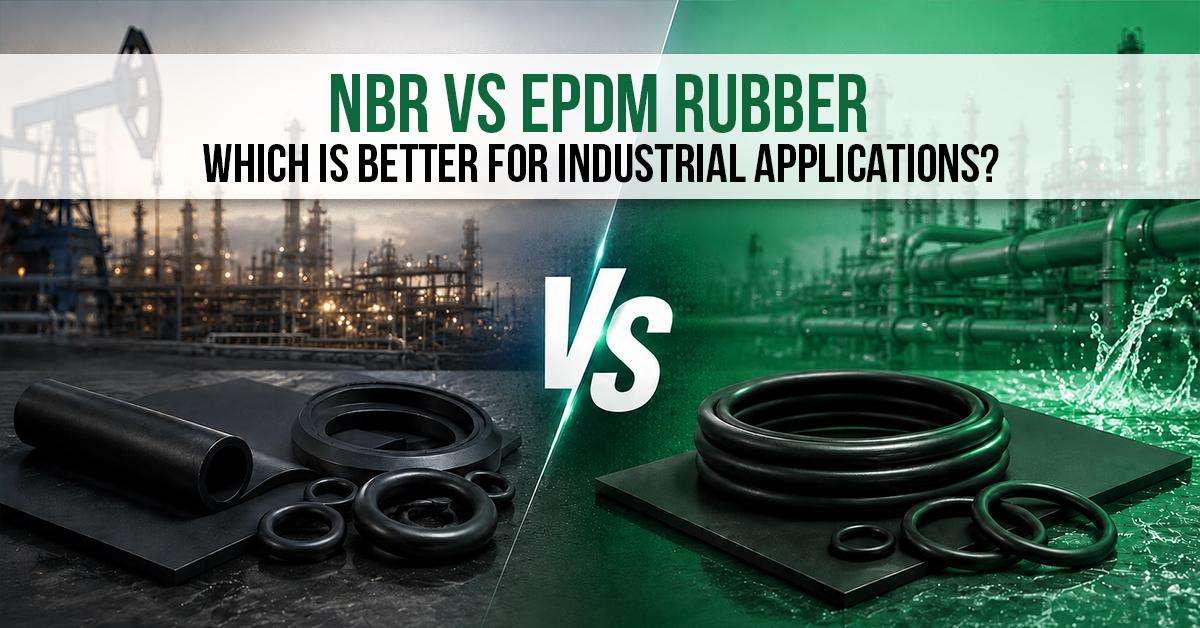
NBR vs. EPDM Rubber: Which is Better for Your Industrial Application?
In industrial manufacturing, the right rubber material directly impacts the product life, sealing performance, maintenance cycles, and overall operational reliability.
Whether the application involves hydraulic seals, outdoor gaskets, anti-vibration pads, or moulded rubber components, choosing the wrong elastomer can lead to premature wear, leakage, swelling, or cracking.
Two of the most commonly used industrial rubber materials are NBR (Nitrile Butadiene Rubber) and EPDM (Ethylene Propylene Diene Monomer). While both are widely used across industries, they are designed for completely different operating environments.
At Easkay India, our custom rubber molded components, O-rings, gaskets, bushes, seals, sleeves, and industrial rubber parts for automotive, electrical, packaging, battery, infrastructure, and engineering applications. One of the most common questions industrial buyers ask is:
“Should we use NBR or EPDM rubber for this application?”
The answer depends on exposure conditions, operating temperature, environmental factors, and chemical compatibility.
What is NBR Rubber?
NBR, commonly known as Nitrile Rubber, is a synthetic elastomer developed for applications involving oil, fuel, grease, and petroleum-based fluids. It is widely used in industries where sealing performance in oily environments is critical.
Because of its oil resistance, NBR is commonly used for:
- Hydraulic seals
- Fuel hoses
- Industrial O-rings
- Oil-resistant gaskets
- Rubber bushes
- Automotive sealing systems
NBR performs reliably in machinery and systems where contact with lubricants and hydraulic fluids is frequent.
What is EPDM Rubber?
EPDM is a weather-resistant synthetic rubber designed for outdoor and high-temperature applications. It offers excellent resistance to sunlight, ozone, moisture, steam, and environmental exposure.
EPDM is widely used for:
- Outdoor sealing systems
- HVAC gaskets
- Electrical enclosure seals
- Waterproof rubber components
- Window and door seals
- Weather-resistant industrial parts
Its ability to withstand harsh weather conditions makes it one of the preferred materials for exterior industrial applications.
| NBR vs. EPDM Rubber: Technical Comparison | ||
| Feature | NBR (Nitrile Rubber) | EPDM Rubber |
| Oil & Fuel Resistance | Excellent | Poor |
| Water Resistance | Moderate | Excellent |
| UV Resistance | Limited | Excellent |
| Weather Resistance | Moderate | Excellent |
| Steam Resistance | Low | High |
| Heat Resistance | Good | Excellent |
| Outdoor Applications | Limited | Highly Suitable |
| Petroleum-Based Environments | Excellent | Not Recommended |
| Ozone Resistance | Moderate | Excellent |
| Common Applications | Hydraulic seals, fuel systems, oil-resistant gaskets | Outdoor seals, HVAC systems, electrical enclosures |
Where NBR Rubber Performs Best
NBR is generally preferred in industrial environments involving:
- Hydraulic oil
- Fuel systems
- Grease exposure
- Petroleum-based fluids
This makes NBR suitable for industries such as:
- Automotive manufacturing
- Hydraulic equipment
- Oil & gas
- Industrial machineries
- Material handling systems
Common NBR products include:
- Nitrile O-rings
- Oil seals
- Rubber washers
- Hydraulic gaskets
- Industrial sleeves
- Rubber bushes
One of the most common failures seen in industrial applications is the use of EPDM rubber in oil-based systems. EPDM tends to swell and degrade when exposed to petroleum oils, which can lead to leakage and sealing failure over time.
Where EPDM Rubber Performs Best
EPDM is designed for applications exposed to:
- Sunlight
- Rain
- Outdoor weather
- Steam
- Water
- Ozone
Because of this, EPDM is commonly used in:
- Outdoor electrical systems
- HVAC equipments
- Construction sealings
- Roofing applications
- Water handling systems
- Exterior automotive seals
EPDM maintains flexibility even after prolonged outdoor exposure, unlike many standard rubber materials that harden or crack under UV conditions.
For applications involving weather exposure or moisture, EPDM generally provides longer service life and better environmental resistance.
Common Problems Caused by Incorrect Rubber Selection
Choosing the wrong rubber material can reduce component life and increase maintenance requirements.
NBR Used in Outdoor Applications
When NBR is continuously exposed to sunlight and ozone, it may:
- Harden over time
- Develop surface cracks
- Lose flexibility
- Reduce sealing performance
EPDM Used in Oil-Based Applications
When EPDM comes into contact with oil or fuel, it may:
- Swell excessively
- Lose dimensional stability
- Become soft
- Fail prematurely
This is why material compatibility is one of the most important considerations during industrial component development.
How Industrial Buyers Typically Select Rubber Materials
Industrial buyers and OEM manufacturers usually evaluate:
- Operating environment
- Fluid compatibility
- Temperature range
- Outdoor exposure
- Compression requirements
- Product life expectancy
For example:
- A hydraulic sealing application will usually require NBR.
- An outdoor electrical enclosure gasket will generally require EPDM.
Material selection becomes even more important in industries where machinery downtime can impact productivity and maintenance costs.
Why Custom Rubber Components Matter
Standard rubber products may not always meet the performance requirements of industrial machinery. Custom molded rubber components help manufacturers achieve:
- Better dimensional accuracy
- Improved sealing performance
- Longer operational life
- Application-specific material selection
At Easkay India, we develop custom rubber components according to application requirements, operating conditions, and customer drawings. Our manufacturing capabilities include rubber, silicone, PVC, PU, and plastic industrial components for multiple sectors.
Choosing Between NBR and EPDM
The selection between NBR and EPDM depends entirely on the application environment.
Choose NBR Rubber for:
- Oil resistance
- Hydraulic systems
- Fuel handling applications
- Industrial machinery
- Petroleum-based environments
Choose EPDM Rubber for:
- Outdoor exposure
- UV resistance
- Weatherproof sealing
- Water and steam applications
- Electrical and HVAC systems
Both materials perform exceptionally well when used in the correct operating environment.
Why Manufacturers Prefer Application-Specific Rubber Components
Industrial applications today require components that can maintain performance under continuous operating stress. This is why manufacturers increasingly prefer application-specific rubber compounds rather than generic materials.
Proper material selection helps:
- Reduce maintenance frequency
- Improve sealing efficiency
- Extend component life
- Prevent operational leakage
- Improve machine reliability
For OEMs and industrial buyers, selecting the correct elastomer is often as important as the component design itself.
Frequently Asked Questions
Which rubber is better for oil resistance?
NBR rubber is better for oil and fuel resistance because it performs well in petroleum-based environments and hydraulic systems.
Is EPDM rubber suitable for outdoor applications?
Yes, EPDM offers excellent resistance to UV rays, ozone, moisture, and weather exposure, making it suitable for outdoor applications.
Can EPDM rubber be used for hydraulic seals?
EPDM is generally not recommended for hydraulic systems involving petroleum oils. NBR is typically preferred for such applications.
Which rubber material is better for water and steam?
EPDM performs better in water and steam environments because of its moisture and heat resistance.
What industries commonly use NBR rubber?
NBR is widely used in automotive, hydraulic, oil & gas, industrial machinery, and sealing applications.
What industries commonly use EPDM rubber?
EPDM is commonly used in construction, HVAC, electrical systems, automotive weather sealing, and outdoor industrial applications.
Conclusion
Both NBR and EPDM are widely used industrial rubber materials, but their performance depends entirely on the application environment.
NBR is preferred for oil, fuel, and hydraulic applications, while EPDM is ideal for outdoor exposure, weather resistance, and water-based systems.
Understanding the operating conditions before selecting a rubber compound helps improve product life, sealing performance, and long-term reliability.
At Easkay India our industrial rubber components include O-rings, gaskets, seals, bushes, anti-vibration pads, molded rubber parts, and custom-engineered components developed according to industrial application requirements.