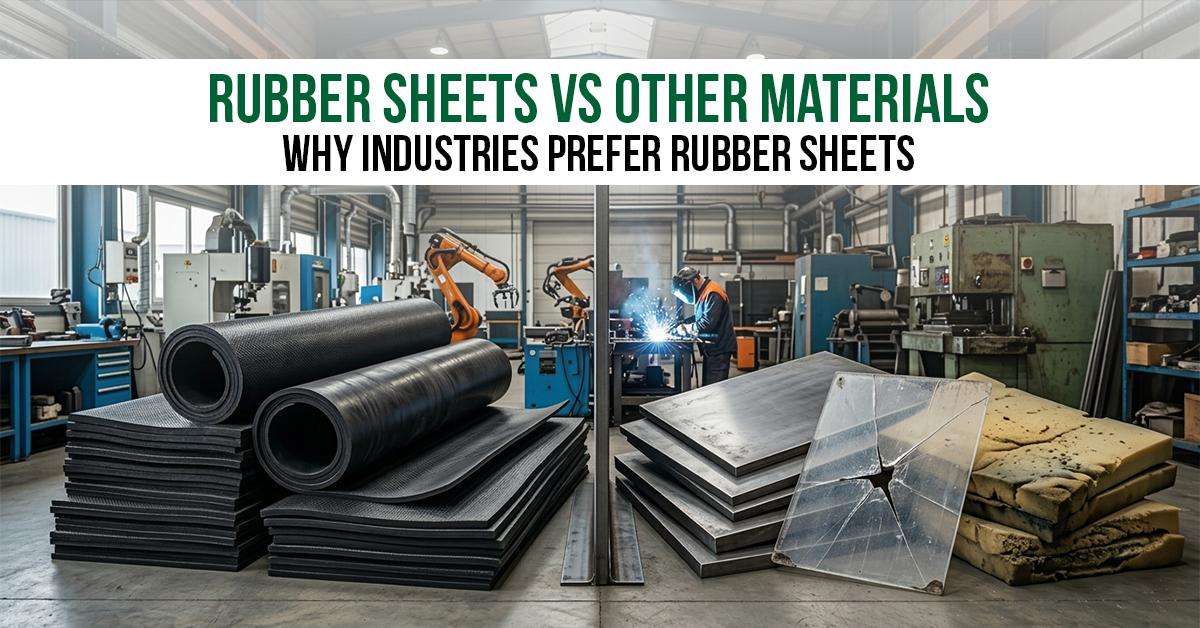
In modern industrial environments, selecting the right material plays a crucial role in ensuring equipment reliability, safety, and long-term performance. Materials used in sealing, insulation, cushioning, and protection must withstand demanding operating conditions such as temperature variations, pressure, chemicals, and mechanical stress. Among the many materials available, rubber sheets have consistently remained a preferred choice across industries.
Rubber sheets are widely used in manufacturing, construction, electrical systems, automotive components, and industrial machinery due to their flexibility, durability, and excellent sealing properties. At Easkay India, we manufacture high-quality rubber sheets designed to meet the needs of various industrial applications. Understanding why rubber sheets are preferred over other materials helps businesses make informed decisions when selecting materials for their operations.
What Are Rubber Sheets?
Rubber sheets are flat sheets made from natural or synthetic rubber compounds, manufactured through controlled processes to achieve specific properties such as elasticity, abrasion resistance, and chemical stability. These sheets are commonly used for sealing, gasketing, vibration damping, insulation, and surface protection.
Depending on the application, rubber sheets can be produced in different materials such as Natural Rubber (NR), Nitrile Rubber (NBR), EPDM, Neoprene, and Silicone, each offering unique performance characteristics.
Rubber Sheets vs Plastic Sheets
Plastic sheets are widely used in industrial environments due to their lightweight nature and rigidity. However, when compared to rubber sheets, plastics often lack the flexibility and resilience required in many applications.
Rubber sheets offer superior elasticity and cushioning, allowing them to absorb vibrations and shocks effectively. Plastic sheets, on the other hand, tend to be rigid and may crack or break under mechanical stress. Rubber also provides better sealing properties because it can compress and adapt to irregular surfaces, ensuring a tight seal.
Additionally, rubber sheets perform better in environments where vibration control is important, such as machinery installations or industrial flooring. Plastics may perform well in structural applications, but rubber remains the preferred choice where flexibility and impact resistance are required.
Rubber Sheets vs Metal Sheets
Metal sheets are known for their strength and structural stability, but they are not suitable for applications requiring flexibility, sealing, or vibration absorption.
Rubber sheets offer several advantages over metal in industrial use. One of the most significant benefits is vibration damping. Machinery and heavy equipment generate vibrations that can cause wear and damage over time. Rubber sheets absorb these vibrations, protecting equipment and improving operational stability.
Another advantage is corrosion resistance. While metals can corrode when exposed to moisture, chemicals, or environmental conditions, rubber sheets maintain their properties and continue performing reliably.
Rubber sheets are also lighter and easier to install, making them a practical solution for insulation, sealing, and protective applications.
Rubber Sheets vs Foam Materials
Foam materials are often used for cushioning and insulation, but they generally lack the strength and durability required for demanding industrial environments.
Rubber sheets provide a better balance of strength, flexibility, and resilience. While foam may compress easily, it often loses its shape and structural integrity over time. Rubber sheets maintain their elasticity and performance even after repeated compression cycles.
In applications such as gasketing or sealing, rubber sheets ensure consistent pressure distribution and long-lasting performance, something foam materials may struggle to achieve.
Key Advantages of Rubber Sheets
The reason industries prefer rubber sheets lies in the unique combination of properties they offer.
Flexibility and Elasticity
Rubber sheets can easily adapt to different shapes and surfaces, making them ideal for sealing and gasketing applications. Their flexibility allows them to maintain tight seals even under pressure or vibration.
Excellent Sealing Performance
In many industrial systems, preventing leaks is critical. Rubber sheets compress effectively, creating airtight and watertight seals that help maintain system efficiency and safety.
Vibration and Shock Absorption
Machinery and equipment generate vibrations that can damage components over time. Rubber sheets absorb these vibrations, reducing noise and extending the life of equipment.
Resistance to Chemicals and Environmental Conditions
Certain rubber compounds are resistant to oils, chemicals, UV exposure, and extreme temperatures. This makes rubber sheets suitable for a wide range of industrial environments.
Durability and Long Service Life
Rubber sheets are designed to withstand mechanical stress and environmental exposure, making them a reliable long-term solution for industrial applications.
Industrial Applications of Rubber Sheets
Rubber sheets are used in many industries due to their versatility and reliability.
In the automotive industry, rubber sheets are used for sealing, vibration isolation, and protective components.
In electrical systems, rubber sheets provide insulation and protection against moisture and environmental conditions.
In manufacturing plants, they are commonly used for machinery pads, conveyor systems, and sealing applications.
In construction, rubber sheets are used for flooring, waterproofing, and impact protection.
Food processing, chemical processing, and general engineering industries also rely on rubber sheets for various operational requirements.
Importance of Material Selection
Not all rubber sheets are the same. Selecting the correct rubber compound based on the operating environment is essential for achieving optimal performance.
For example:
- Nitrile rubber sheets are commonly used where oil resistance is required.
- EPDM rubber sheets perform well in outdoor environments and resist weathering.
- Silicone rubber sheets are suitable for high-temperature and hygienic applications.
- Natural rubber sheets offer excellent elasticity and abrasion resistance.
Working with an experienced manufacturer helps ensure that the correct material grade is selected for each application.
Rubber Sheets in Modern Industry
As industries continue to advance, materials must deliver reliable performance under increasingly demanding conditions. Rubber sheets remain a trusted solution because they combine flexibility, durability, and resistance to environmental factors.
Modern manufacturing processes allow rubber sheets to be produced with consistent quality and customized specifications, making them suitable for both standard and specialized applications.
At Easkay India, we manufacture rubber sheets designed to meet the diverse needs of industrial customers, ensuring reliable performance across various sectors.
Conclusion
When comparing rubber sheets with other materials such as plastics, metals, and foam, it becomes clear why industries continue to rely on rubber solutions. Their ability to provide flexibility, sealing performance, vibration absorption, and durability makes them an essential material in modern industrial operations.
For businesses seeking reliable materials for sealing, insulation, cushioning, or protection, rubber sheets remain one of the most practical and effective choices available.
By selecting high-quality rubber sheets and maintaining proper installation practices, industries can achieve improved performance, longer equipment life, and greater operational efficiency.