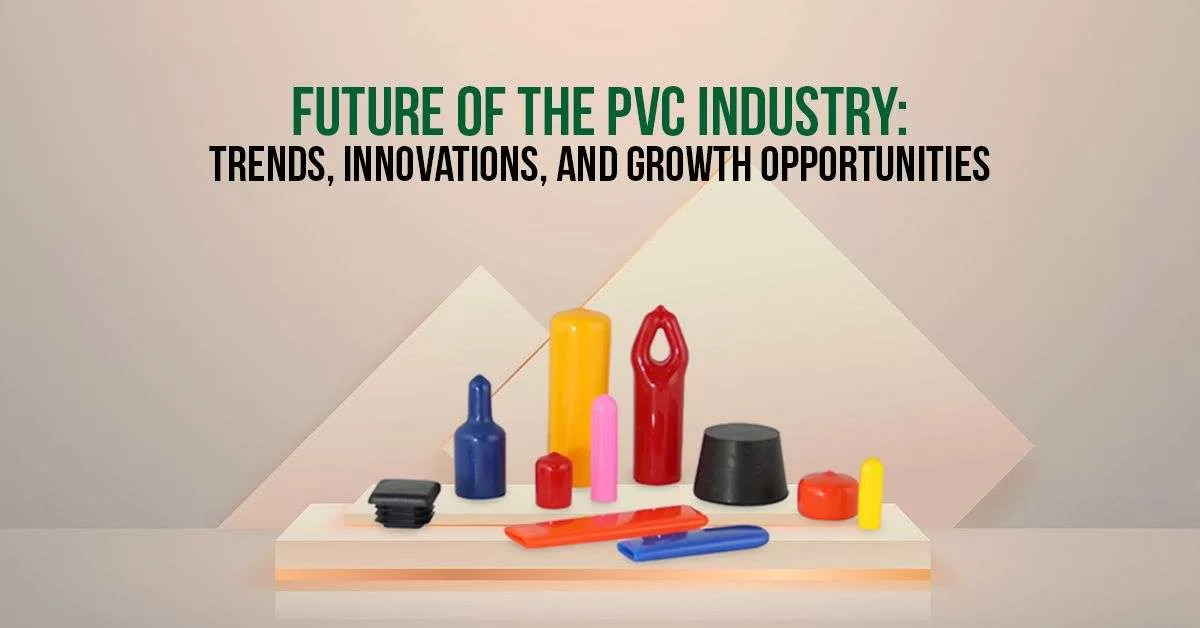
Future of the Industrial PVC Industry: Trends, Innovations, and Growth Opportunities
Polyvinyl Chloride (PVC) has long been a critical material in the rubber and polymer components industry, especially for applications that demand protection, flexibility, and cost efficiency. Unlike rigid PVC used in piping and construction, industrial flexible PVC plays a vital role in manufacturing PVC dust caps, protective covers, plugs, sleeves, and end caps used across automotive, electrical, engineering, and packaging sectors.
As industries evolve toward higher efficiency, automation, and export-driven manufacturing, the role of industrial PVC components is expanding rapidly. The future of the industrial PVC industry lies in material innovation, application-specific design, and value-added manufacturing.
Understanding Industrial PVC in Rubber & Polymer Applications
Industrial PVC used in rubber industries is typically plasticized PVC, engineered to provide:
- Flexibility and resilience
- Impact resistance
- Chemical and moisture protection
- Easy moulding and extrusion
- Cost-effective mass production
PVC components such as dust caps, port covers, pipe end caps, threaded protectors, and plugs are essential for safeguarding finished parts during manufacturing, handling, storage, and transportation.
These components may be small in size, but they play a crucial role in maintaining product quality and reducing rejection and damage costs.
Key Trends Shaping the Industrial PVC Components Market
1. Rising Demand for Protective Components
With increasing focus on damage prevention and quality control, industries are actively adopting PVC dust caps and protective covers to safeguard:
- Threaded parts
- Hydraulic fittings
- Electrical connectors
- Machined metal components
2. Shift Toward Custom PVC Components
Standard parts no longer meet all industrial needs. OEMs and exporters increasingly require custom-sized PVC caps, plugs, and sleeves designed for specific geometries and tolerances.
This has driven demand for:
- Custom moulded PVC dust caps
- Application-specific wall thickness
- Tight dimensional control
- Colour coding for part identification
3. Lightweight and Cost-Optimized Designs
Industrial buyers are focused on reducing logistics costs. PVC components are evolving to become:
- Lighter without losing strength
- Optimized in wall thickness
- Designed for easy fit and removal
Innovations in Industrial PVC Manufacturing
Advanced Compounding Techniques
Modern PVC compounding allows precise control over:
- Flexibility (Shore hardness control)
- Chemical resistance
- UV and weather resistance
- Low-temperature performance
.Improved Moulding and Extrusion Processes
Injection moulding and extrusion advancements have improved:
- Surface finish
- Dimensional accuracy
- Production speed
- Repeatability
Colour-Coded and Application-Specific PVC Parts
Colour coding is becoming a functional requirement rather than a cosmetic one. PVC dust caps and plugs are now manufactured in different colours to:
- Identify sizes quickly
- Indicate application type
- Differentiate customer-specific parts
Sustainability and the Role of PVC
Sustainability is influencing material choices across industries. Industrial PVC components support sustainability through:
- Long service life
- Reusability in many applications
- Reduced scrap due to protection of finished parts
- Compatibility with recycled PVC in non-critical applications
Manufacturers are increasingly exploring reprocessed and recycled PVC compounds for dust caps and protective covers without compromising performance.
Growth Opportunities in the Industrial PVC Segment
Automotive and Auto-Component Industry
PVC dust caps and plugs are widely used to protect:
- Brake components
- Fuel system parts
- Hydraulic fittings
- Machined metal assemblies
As automotive production and exports grow, demand for PVC protective components will continue to rise.
Electrical and Electronics Manufacturing
PVC caps and sleeves protect:
- Cable ends
- Electrical terminals
- Switchgear components
With expanding electrification and electronics manufacturing in India, this segment presents strong growth potential.
Export-Oriented Manufacturing
Export customers demand:
- Consistent quality
- Custom packaging
- Compliance with international standards
PVC protective components are essential for ensuring products reach global customers damage-free.
Industrial Packaging and Logistics
PVC end caps and covers reduce transit damage, rework, and returns, making them indispensable in industrial packaging systems.
Challenges in the Industrial PVC Industry
While growth prospects are strong, manufacturers must navigate:
- Raw material price fluctuations
- Increasing customer expectations for customization
- Quality consistency across large volumes
- Environmental compliance and documentation
How Easkay India Supports the Future of Industrial PVC
At Easkay India, we manufacture industrial PVC components designed for real-world applications. Our capabilities include:
- PVC dust caps and end caps
- PVC plugs and port covers
- Protective sleeves and custom covers
- Application-specific PVC moulded parts
We focus on:
- Custom design and tooling support
- Consistent dimensional control
- Multiple size and colour options
- Quality-tested materials for industrial use
Conclusion
The future of the industrial PVC industry, within rubber and polymer manufacturing is driven by customization, protection-focused design, and performance consistency. As industries demand better protection solutions and export-ready components, PVC dust caps, plugs, and covers will remain essential.
Manufacturers who invest in material innovation, flexible manufacturing, and customer-specific solutions will lead this next phase of growth.
At Easkay India, we are committed to delivering industrial PVC components that meet evolving application needs and global quality expectations.
Recent Posts