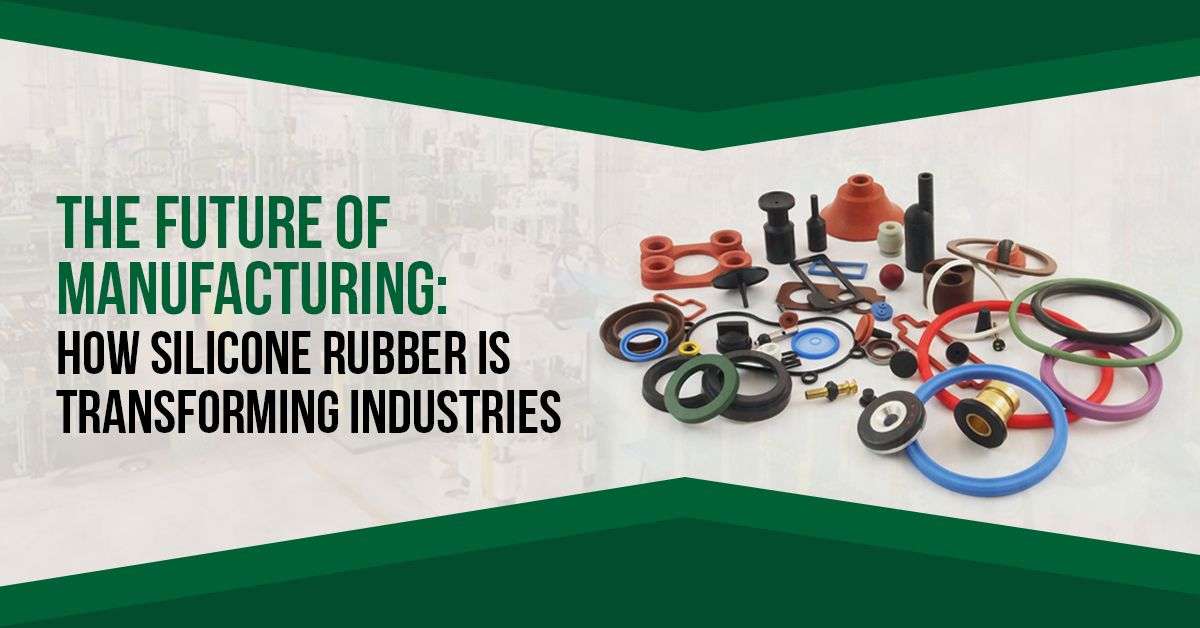
Manufacturing is growing rapidly in India, driven by rising quality expectations, regulatory compliance, automation, and demand for long-lasting materials. Among advanced elastomers, silicone rubber has emerged as a critical material shaping the future of modern manufacturing. Its unique combination of Wide temperature resistance, chemical resistance, flexibility, and durability makes it indispensable across industries ranging from automotive and electronics to healthcare and food processing.
Why Silicone Rubber Is a Game Changer in Manufacturing
Silicone rubber differs fundamentally from conventional elastomers like natural rubber, EPDM, or nitrile. It is engineered for environments where performance consistency matters more than cost alone.
Key properties driving adoption include:
- Wide temperature resistance (-60°C to +230°C)
- Excellent electrical insulation
- High resistance to UV, ozone, and weathering
- Non-toxic and food-grade compatibility
- Low compression set and long service life
These characteristics allow manufacturers to design components that perform reliably under extreme operating conditions, reducing downtime, failures, and maintenance costs.
Growing Industrial Applications of Silicone Rubber
1. Automotive and EV Manufacturing
The automotive industry is undergoing a structural shift toward electric vehicles, lightweight components, and higher thermal demands. Silicone rubber plays a critical role in:
- High-temperature gaskets and seals
- Hoses and connectors exposed to engine heat
- Maskings for Paintshop
- Vibration damping components
- Insulation for EV battery systems and charging infrastructure
2. Electrical and Electronics Industry
As electronics become more compact and powerful, component protection becomes critical. Silicone rubber is widely used for:
- Cable insulation and sleeves
- Sealing gaskets for enclosures
- Thermal interface materials
- Dust, moisture, and vibration protection
3. Healthcare and Medical Devices
Medical manufacturing demands materials that are safe, stable, and compliant with strict standards. Silicone rubber meets these requirements due to its:
- Biocompatibility
- Sterilization resistance
- Odorless and tasteless nature
- Long-term flexibility
4. Food, Beverage, and Pharmaceutical Processing
In regulated environments, contamination risks must be eliminated. Food-grade silicone rubber is widely used for:
- Sealing rings and gaskets
- Silicone hoses and tubes
- Plugs, caps, and membranes
- High-temperature processing equipment
5. Industrial Machinery and Automation
As factories adopt automation and smart manufacturing systems, component reliability becomes mission-critical. Silicone rubber components support:
- Continuous operation under heat and pressure
- Reduced wear in moving assemblies
- Consistent sealing performance
- Long operational life in harsh industrial conditions
Manufacturing Advancements in Silicone Rubber Components
The transformation is not limited to material performance alone. Advances in silicone rubber manufacturing processes are reshaping production efficiency and customization.
Modern techniques include:
- Compression molding for high-strength components
- Injection molding for precision and repeatability
Sustainability and Long-Term Value
Sustainability is becoming a decisive factor in material selection. Silicone rubber supports sustainable manufacturing by:
- Offering longer service life
- Reducing frequent replacements
- Maintaining performance without additives
- Supporting energy-efficient processes
While silicone rubber may have a higher upfront cost compared to traditional elastomers, its total cost of ownership is significantly lower, making it a smart long-term investment for manufacturers.
The Indian Manufacturing Perspective
India’s manufacturing sector is moving toward global competitiveness, export-driven growth, and compliance with international standards. Silicone rubber components are increasingly in demand for:
- Export-oriented manufacturing
- High-performance industrial applications
- Automotive and EV supply chains
- Medical and pharmaceutical equipment
Domestic manufacturers who adopt advanced materials like silicone rubber gain a clear edge in quality, reliability, and global acceptance.
Why Silicone Rubber Will Define the Future of Manufacturing
The future of manufacturing will be shaped by materials that deliver performance, reliability, and adaptability. Silicone rubber meets these demands across industries and operating conditions.
As automation increases, regulatory requirements tighten, and equipment complexity grows, silicone rubber will continue to replace conventional elastomers in critical applications.
Manufacturers who integrate silicone rubber components today are not just improving product quality—they are future-proofing their operations.
Conclusion
Silicone rubber is no longer a niche material. It is a strategic enabler for modern manufacturing across automotive, electronics, healthcare, food processing, and industrial machinery.
With its unmatched thermal stability, durability, and versatility, silicone rubber is transforming how industries design, manufacture, and operate.
At Easkay India, we manufacture custom silicone rubber components engineered for demanding industrial applications. Backed by material expertise, controlled processes, and strict quality assurance, we help manufacturers build products that last longer and perform better.